
“The true strength of a communications network is often measured not when everything is working perfectly, but when disaster strikes and people remain connected.”
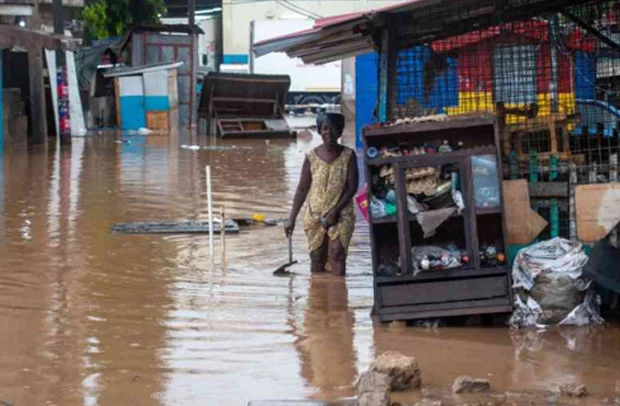
When heavy rains recently triggered widespread flooding across parts of Ghana, public attention understandably focused on damaged roads, submerged homes, disrupted businesses, and the tragic loss of lives. These are the visible consequences of disasters and rightly deserve national attention.
Yet amid those scenes, another piece of infrastructure quietly continued to serve millions of Ghanaians. Our telecommunications networks enabled emergency communication, mobile money transactions, access to information, and contact between families, businesses, and emergency responders.
Ironically, because these networks largely remained operational, they attracted very little public discussion.
Perhaps that is the greatest compliment resilient infrastructure can receive. When systems continue to work during difficult times, they often go unnoticed.
That experience raises an important question.
What enables a nation’s communications network to remain available when communities need it most?
The answer extends far beyond the mobile towers we see along our roads. Modern telecommunications depend on an interconnected ecosystem of communication networks, transmission systems, data centres, reliable power supplies, internet gateways, Network Operations Centres, and skilled professionals working continuously to monitor and maintain these systems.
Resilience is therefore not the result of a single technology. It is the outcome of careful engineering, operational preparedness, and continuous investment in keeping networks available under challenging conditions.
This matters because telecommunications have become an essential part of modern society. Emergency services rely on communications to coordinate their response. Financial institutions depend on digital connectivity to process transactions. Businesses require reliable networks to continue operating, while citizens increasingly rely on mobile communications for information and reassurance during emergencies.
In many respects, resilient communications help other sectors remain resilient as well.
As climate change increases the frequency and intensity of extreme weather events across many parts of the world, discussions about national resilience are becoming increasingly important. In Ghana, these conversations often focus on transport infrastructure, drainage systems, and energy. These are all critical priorities.
However, telecommunications also deserve to be recognised as an important component of national resilience.
Encouragingly, Ghana is already taking positive steps in this direction. The National Communications Authority (NCA), with support from the United Nations World Food Programme (WFP), has commenced the development of the country’s first National Emergency Telecommunications Plan (NETP). Although the initiative is still under development, it represents an important opportunity to strengthen preparedness and coordination before, during, and after emergencies.
Like any national framework, its greatest value will lie not simply in its development, but in its effective implementation and regular review as technologies and risks continue to evolve.
Building telecommunications resilience is a shared responsibility.
Government can continue integrating emergency telecommunications planning into broader disaster risk reduction and climate adaptation strategies. The National Communications Authority can further strengthen resilience through regulatory guidance and sector-wide collaboration. Telecommunications operators can continue investing in resilient infrastructure and operational preparedness, while universities and research institutions can contribute valuable research into climate-resilient communications systems suitable for Ghana’s environment.
The objective is not merely to respond effectively when disasters occur. It is to strengthen the systems that enable society to function despite disruption.
One lesson from the recent floods is worth remembering.
We often notice infrastructure only when it fails. Yet some of our most important national assets are those that continue to perform quietly under pressure, allowing emergency services to coordinate, businesses to operate, and families to remain connected.
As Ghana continues investing in climate resilience and digital transformation, telecommunications deserve a central place in these conversations. Protecting resilient communications is not simply an engineering consideration. It is an investment in public safety, economic continuity, and national resilience.
By Theodore P. Yebuah