
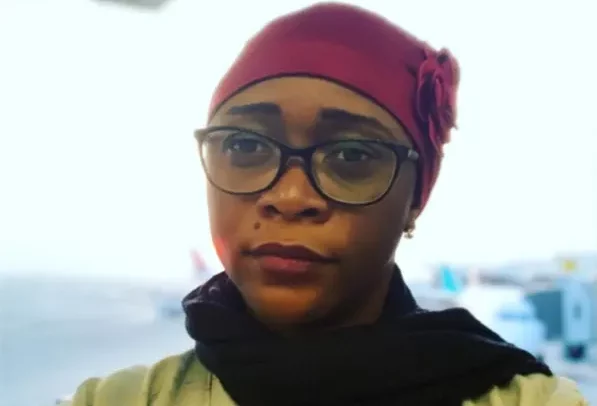
Leila Djansi
With the Academy Awards approaching this weekend, filmmaker and writer, Leila Djansi has reflected on a project that helped open an international pathway for Ghanaian cinema.
Several years ago, Djansi convened Ghana’s Oscar selection committee, establishing the body responsible for submitting Ghanaian films to the Academy Awards’ International Feature category. The initiative was rooted in the belief that the global perception of Africa is largely shaped by storytelling.
“I love my country,” Djansi says. “And I believe the way Africa is understood in the world can change through film.”
In 2018, the committee submitted Azali, directed by Kwabena Gyansah. The film, which is now streaming on Netflix, was noted at the time as a potential contender in the international category and helped bring attention to Ghana’s emerging film industry.
For decades, many of the stories about the continent that reach global audiences have centred on war, poverty, or disease. While those realities exist, Djansi believes they represent only a narrow slice of African life.
“Africa is also imagination, family, humour, ambition, and complexity,” she says. “Cinema can show the full humanity of the continent.”
That belief has shaped Djansi’s work beyond filmmaking. When Netflix and UNESCO launched an initiative to reimagine African folktales for a global audience, Djansi mentored emerging filmmakers involved in the project, supporting a new generation of storytellers who drew on African traditions and cultural memory.
Creating a functioning Oscar submission process meant that Ghanaian filmmakers could participate in one of the most visible global platforms for cinema. Once a country has an official committee recognised by the Academy, films produced there can be formally considered for international recognition.
For Djansi, the effort was never about the award itself. It was about visibility and the opportunity for African stories to be seen on their own terms.
“When the stories change, the way people see us changes,” Djansi says. “And that shift matters.”
Based in Los Angeles, Djansi has built her career as a filmmaker while maintaining close ties to Ghana’s creative community. Her projects explore psychological storytelling and the emotional inheritance carried across generations.
This year, Ghana did not submit a film for Oscar consideration. Djansi attributes the absence largely to shifts in the financial and distribution landscape affecting African cinema.
“The distribution landscape has changed tremendously,” she says. “Many of the companies entering the African market do not fully engage with the local industry or audience. When those approaches fail, they leave.”
Djansi believes the problem is not a lack of audience.
“The audience is there. It is massive and increasingly sophisticated,” she says. “But too often distributors bypass that audience with stories they assume Africans want, based on outdated ideas of who we are.”
For Djansi, the long-term solution is simple: support films that reflect the breadth of African storytelling.
“There is an audience for historical drama, romance, horror, and literary adaptation,” she says. “African audiences deserve the same range of stories that audiences anywhere in the world enjoy.”
As the film industry gathers again for the Oscars, Djansi says the larger mission remains unchanged.
“Stories travel farther than politics or headlines,” she says. “If we want the world to understand Africa differently, we have to tell our stories ourselves.”