
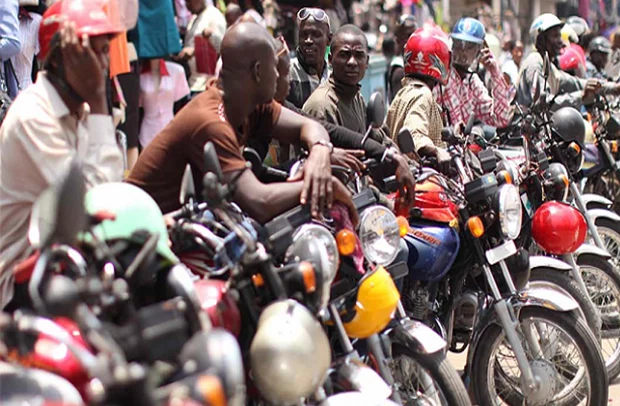
Hundreds of Niger nationals have entered the commercial motorcycle (Okada) business in Accra, creating the impression of an immigration policy shift that has enabled their seeming “invasion.”
Indigenous operators are quietly complaining, as the influx is steadily edging them out of business at an alarming rate.
The non-Ghanaian operators have established bases at strategic locations across Accra. Some have begun picking up the rudiments of pidgin English and Akan, which are just enough to communicate with customers.
Ironically, Ghanaians would not be permitted to engage in such a business in Niger, a country where even salt imports must go through local businessmen.
Niger is known for strongly protecting local participation in business and limiting the involvement of non-indigenes. The country’s military leaders have also withdrawn from the Economic Community of West African States (ECOWAS).
In principle, ECOWAS protocols do not allow for unrestricted permanent employment for citizens of member states.
In Kumasi, the Ashanti Regional capital, some Niger nationals have also established a presence, operating rickshaws, which is locally known as “pragya,” the three-wheeled motorcycle.
Here too, local operators are raising concerns about the growing influx of foreign nationals, who are saturating the business with their vehicles.
Some of these operators are reportedly supported by compatriots already settled in Ghana, who assist them in acquiring and running the rickshaws.
As in some Asian countries, rickshaws have become a common mode of transport in Kumasi, where Okada operations, as seen in Accra, are largely non-existent.
Observers of intra-city transport are questioning how these foreign operators have managed to bypass immigration checks and enter a sector traditionally dominated by Ghanaians.
The foreign Okada operators are often easily identifiable. With French as the official language in Niger, many face challenges communicating with passengers. Their difficulty in reading road signs also raises safety concerns, potentially putting pillion riders at risk.