
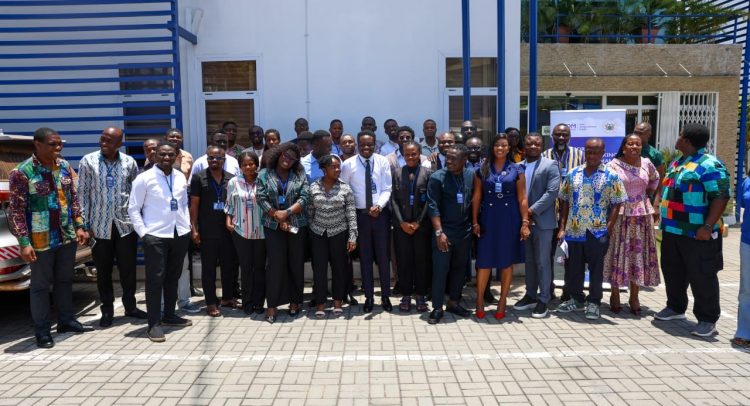
Journalists and facilitators in a group photo after the training
The International Organization for Migration (IOM) has organised a training session for sports journalists to broaden their knowledge on the growing trendss in human trafficking through sport.
The training was organised ahead of the National Forum on Addressing Human Trafficking through Sports and forms part of activities commemorating the International Day of Sport for Development and Peace.
It forms part of plans to intensify efforts to address trafficking in sports through strong media engagements.
It also aims to enhance the capacity of sports journalists by deepening their understanding of trafficking trends and risks while enhancing their knowledge of safe and regular migration pathways for athletes.
The raining is expected to improve the quality of media coverage, strengthen collaboration with key stakeholders, and increase public awareness through consistent, well-informed reporting on trafficking in sports.
Various facilitators took journalists through various topics and laws relating to human trafficking, exposing them to a rather alarming number of Ghanaians who are being trafficked to various countries, including African countries under the guise of playing for non-existent football clubs.
Some of these victims are minors as low as 12, some whose parents had to take huge loans and sometimes self-off properties to fund the trafficking disguised as football career opportunities.
Director at the Human Trafficking Secretariat of Ministry of Gender Children and Social Protection, Abena Annobea Asare, pointed out measures put in place by the Ministry to conquer human trafficking which is the second largest cross-border crime in the world.
She said recent global data from 2022 shows that women and girls accounted for 61 percent of identified trafficking victims, with Africa accounting for 31 percent of cross-border trafficking of victims.
She said exploitation does not have to occur for the offence of trafficking to be complete, pointing out that the offence sets in once the intent is established.
She also touched on the punishment prescribed for human trafficking, adding that using the services of trafficked persons is also an offence punishable by a term of imprisonment.
She added that the Ministry is using the globally-approved four (4) ‘Ps’; prevention, protection, prosecution and partnership to fight human trafficking.
Director of Anti-human Trafficking Unit of the Criminal Investigations Department of the Ghana Police Service, Superintendent William Ayaregah, said human trafficking in Sports takes advantage of young people facing difficult socio economic circumstances who may see a professional career in sports as a way out of poverty and a way to financially assist their families.
He pointed out that many migrants athletes are trafficked with the promise of a lucrative professional career in sports abroad, particularly footballers and are being disappointed.
“Human trafficking is a crime that strips people of their rights, ruins their dreams and robs them of their dignity. Help stop this crime,” he added.
National Communications Officer, IOM Ghana, Angela Bortey urged journalists to use fair and respectful language when reporting on human trafficking issue, respect the rights of victims as well and protect their identity in order to avoid the possibility of re-traumatization and exposure to further harm or exploitation.
She added that responsible reporting can prevent trafficking, protect victims, strengthen justice systems and build public trust.
Veteran sports journalist, Kelvin Owusu Ansah urged his colleague journalist to add a human twist to their reportage when dealing with human trafficking victims and respect their rights, even it means foregoing the story.
BY Gibril Abdul Razak