
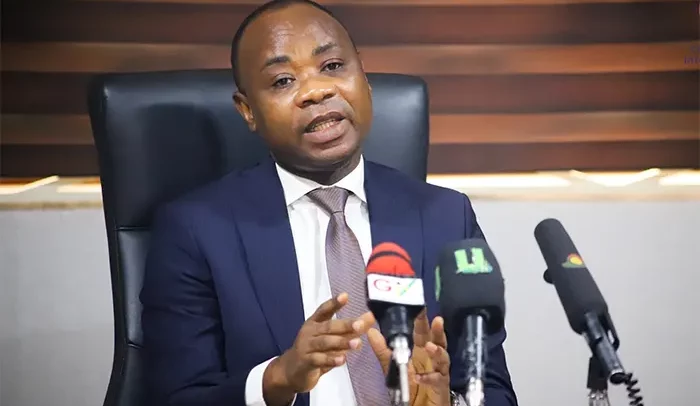
Bright Appiah
The Greater Accra Region has become a hotspot for child sexual abuse cases, with defilement topping the list of cases, a new report by Child Rights International (CRI) Ghana has stated.
The report, “Perfidy of Justice against Children: Evidence from Child Abuse Cases in Ghana,” revealed that out of 899 child abuse cases recorded by the Domestic Violence and Victims Support Unit (DOVVSU) across 10 regions, defilement accounted for 534 cases, representing 59.4 per cent, with Greater Accra contributing the highest proportion.
The figures place the region at the centre of what the report describes as a widespread and persistent pattern of sexual violence against children.
Regional Concentration
Giving a regional breakdown, the Greater Accra Region alone accounted for 33.5 per cent of all reported cases, significantly higher than other regions.
It was followed by the Ashanti Region with 19 per cent and Central Region with 12.2 per cent.
The report noted that while cases were recorded in all regions studied, the concentration in Greater Accra highlights both the scale of the problem in urban centres and the pressure on child protection systems in the capital.
Defilement Dominates Cases
Across all regions, defilement remains the most prevalent offence, far exceeding other forms of abuse such as assault, indecent assault and emotional abuse.
Speaking at a press conference in Accra, Executive Director of Child Rights International, Bright Appiah, said the data points to a troubling national pattern.
“Other offences such as assault and indecent assault were recorded, but together, they fall far behind defilement in prevalence,” he said.
He added that the widespread nature of the cases indicates that child sexual abuse is not confined to specific areas but is a national concern.
System Under Strain
Despite the high number of reported cases, the report highlighted significant challenges in the justice system’s response.
“Of the 899 cases analysed: 51 per cent remain under investigation, 32 per cent have been referred to court, 16 per cent have no traceable status,” the report disclosed.
The report described the figures as evidence of a system struggling to manage both the volume and seriousness of cases.
Mr. Appiah noted that many cases stall at the investigation stage, with delays in moving them to prosecution.
For cases that proceed to court, delays remain a major concern.
The report documents cases that have remained pending for periods ranging from two to 10 years.
In one instance, Mr. Appiah said, a defilement case in the Eastern Region had been unresolved for a decade, while others had taken several years to conclude.
Such delays, he noted, weakened confidence in the justice system and prolonged uncertainty for victims.
Impact On Children & Families
The report highlighted the psychological and social impact of prolonged cases on child victims.
Children often experience trauma, anxiety, and stigma, particularly where cases remain publicly known within their communities.
Educational disruption is also common, as victims miss school due to court appearances or struggle to concentrate due to stress.
Families pursuing justice face financial strain, with costs related to transportation, medical examinations, and lost income accumulating over time.
The report estimates that total expenses for a single case may range between GH¢4,000 and GH¢10,500.
Call For Urgent Action
Mr. Appiah has, therefore, called for urgent reforms to strengthen the response to child protection cases.
Recommendations he made included the introduction of mandatory timelines for case resolution, establishment of specialised courts, and the development of a national digital case tracking system.
The organisation also called for expanded psychosocial and legal support for victims and their families.
Growing Concern
The report concludes that while Ghana has established legal frameworks to protect children, delays, weak coordination, and gaps in accountability continue to undermine their effectiveness.
With Greater Accra leading in reported cases, the findings have intensified calls for targeted interventions in high-burden regions, alongside broader national reforms to address what is increasingly being described as a child protection crisis.
A Daily Guide Report