
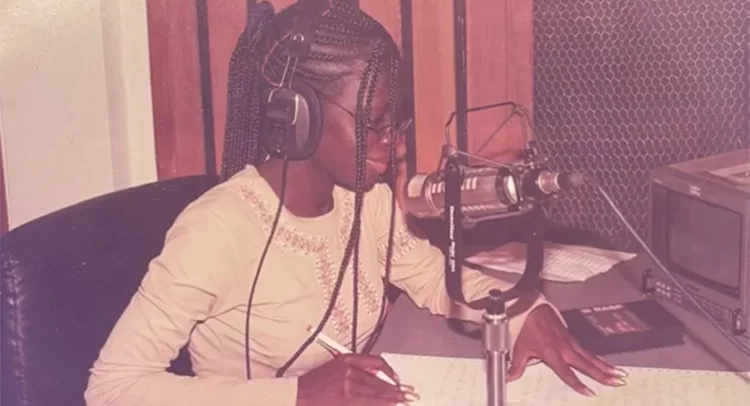
Photo from 2003, when we were still shooting, recording VOs and editing on Betacam
I have spent more time in Obuasi in the last three months than I have in the last eight years. I grew up here. My first career at the age of 18 was at Shaft Radio in Obuasi. I was not a trained journalist then, however the late Ashanti Regional GJA Chairman, Samuel Enin, who was the News Editor at the station, took me under his wing in his newsroom and mentored me. I also benefited from the wisdom of trained journalists at the station, including Kojo Arkaah Kwateng and Richard Elimah.
The bulk of the people who have come to visit me in my father’s house know me from either my years at Shaft FM or my years on television. So when Kwame, an old friend from my Shaft years, came home, it did not take long before we started talking about media. And then it turned into a debate on whether journalism is dying and whether influencers are taking over.
Kwame thinks the answer to both is yes. I don’t.
I think journalism is evolving, which is not a bad thing. However it means we have a responsibility to shape it and give it a sense of direction. Because if we don’t, others will. And they already are.
I understand why Kwame feels the way he does. Newsroom jobs continue to decline both locally and globally. Advertising revenue has shifted. The audience attention journalists used to command is falling. The old structures that supported journalists are under intense pressure, mainly big newsrooms and ad-funded models. Careers in comms and marketing continue to rise as journalists transition. I can even bet more people are going to PR and marketing schools than journalism schools.
But declining doesn’t mean dying. It means shifting. Digital continues to accelerate and new players continue to emerge. Podcasters, independent writers, AI and technology continue to change production dynamics.
In February I sat in an AI class with my 14-year-old son and I am full of admiration to say half the things he knew and could do with AI tools still has me dumbfounded. I still jokingly remind him that with my experience, knowledge and a growing understanding of AI, I bring something he can’t yet. But he is 14. Give him time.
Journalism has always been about public good. At both radio and television newsrooms and at the Ghana Institute of Journalism, the emphasis was the same, the 5 Ws and H. That hasn’t changed. What has changed is everything around it.
The old gatekeeping role is gone. What counted as news, what stories were told and whose voices were important used to be determined by journalists and editors. Now anyone can publish. The audience chooses their sources. Influence is fragmented. The distribution model funded by advertising revenue and institutional backing has been disrupted by the big digital platforms, and audiences expect content for free. And being accurate is no longer enough. Your audience also expects you to be engaging in order to earn their attention. Now with influencers in the mix, it is ‘Citizen Journalism Elevated 2.0’.
Trust has shifted too. A few years ago, we all used to say “I heard it from this television station or newspaper or radio, and so it’s true.” Now we hear “I follow this person and I trust how he or she thinks.” Trust has become personal, relationship-based and earned over time. That shift is real, and it is the single biggest reason people believe influencers are replacing journalists.
But are they?
Kwame thinks people like me were part of the problem. We left journalism. We went where the money was. And in our absence, the influencers stepped in. They are the ones making the money now. They are the ones informing people. They are the ones commanding the attention that used to belong to newsrooms.
However, I don’t think influencers have replaced journalists. They have filled a gap, not replaced journalists. And there is a difference.
Source: Gifty Bingley