
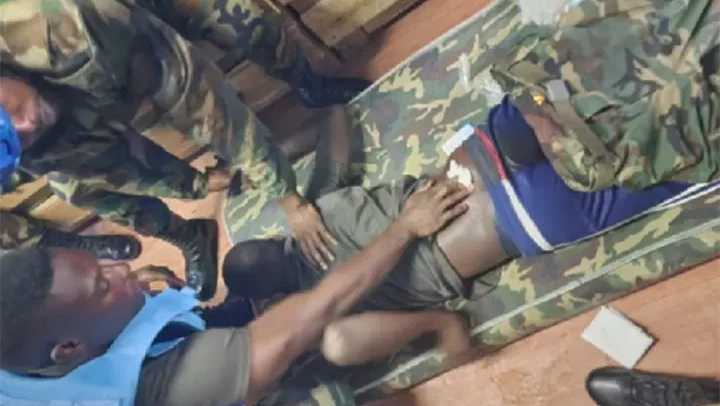
The Israel Defense Forces (IDF) on Wednesday acknowledged that they were responsible for the attack that injured some Ghanaian soldiers on peacekeeping operations in Southern Lebanon.
According to the Israeli newspaper, Times of Israel, the IDF acknowledged that its tank fire mistakenly hit a United Nations (UN) position in southern Lebanon on March 6, wounding some Ghanaian Battalion (GHANBATT) peacekeepers in an incident that underscores the growing risks as Israeli operations expand.
Initial findings by an internal UN inquiry had suggested Israel was behind the attack, a Western military source told Reuters on Tuesday.
The UN peacekeeping mission, known as United Nations Interim Force in Lebanon (UNIFIL), is stationed in southern Lebanon to monitor hostilities along the demarcation line with Israel — an area that is at the heart of clashes between Israeli troops and Iran-backed Hezbollah fighters.
The mission, which will be halted at the end of 2026, has been sporadically caught in the crosshairs of both Israel and Hezbollah over the last couple of years, but with Israel considering a broader ground operation to stem persistent rocket and drone fire from the terror group, the risks could be greater in the coming weeks.
In a statement to Reuters, the IDF acknowledged its troops were behind the incident, but said they had been responding to anti-tank missile fire from Hezbollah, which had moderately wounded two of its soldiers.
“A comprehensive investigation concluded in recent days determined that the fire that hit the UNIFIL personnel was mistakenly carried out by the IDF troops that misidentified the UNIFIL troops as the source of the anti-tank fire moments earlier,” it said.
“The IDF regrets the incident and has conveyed its apologies through the appropriate channels to Ghana and the United Nations. The findings of the investigations have been disseminated within the IDF to prevent recurrence of similar incidents.”
Lebanon was pulled into the war in the Middle East when Hezbollah began firing rockets and drones at Israel in support of its sponsor Iran, igniting a new Israeli offensive against the terror group.
According to the Western source, the preliminary conclusions led by UNIFIL’s Force Commander Reserve with support from explosive ordnance disposal specialists indicated that three strikes at the al-Qawzah base were direct hits from the main gun of an Israeli battle tank.
They were fired using 120-mm M339 HE-MP-T shells, the source said.
“Israeli involvement in the attack against UNIFIL is undeniable, given that these munitions are manufactured by Israel Military Industries (IMI),” the source said.