
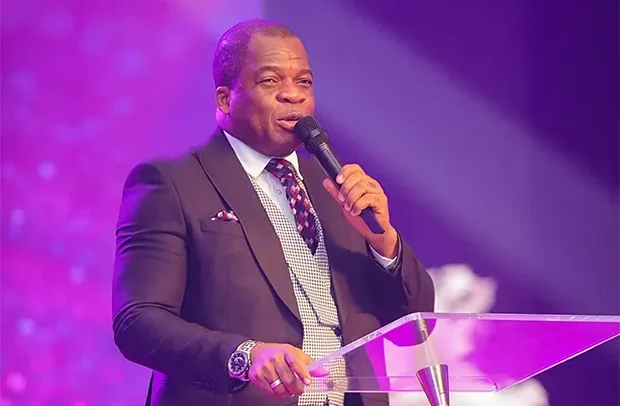
Rev. Stephen Wengam
During an interdenominational service to mark the first anniversary of the second term of President John Mahama, the General Superintendent of Assemblies of God, Ghana, Rev. Stephen Wengam, exhorted Ghanaians to shun grumblings and to appreciate what God has done for them.
The activity, which took place at the forecourt of the Presidency in Accra, saw the General Superintendent admonishing his compatriots to shun the attitude of pessimism and grumbling which makes it difficult to acknowledge what God has done for them individually and as a nation.
“Grateful people are content with their accomplishments, and this spurs them to higher heights and further translates into national development,” Rev. Wengam pointed out.
The church service was graced by President John Mahama, First Lady Mrs. Lordina Mahama, Vice President Professor Naana Jane Opoku Agyemang, Chief Justice Paul Baffoe- Bonnie, Ministers of State, Members of Parliament, heads of the security forces and other institutions.
The clergyman, who spoke on the theme “The impact of gratitude on leadership success and national development,” picked lessons from how Samuel led Israel to express gratitude to God, and declared, “Ebenezer,” meaning: this is how far God had been good to them.
Rev. Wengam commended President Mahama for instituting the special event to enable the nation to appreciate God for his blessings.
He recalled how when the nation of Israel observed that thanksgiving, they attracted blessings of peace, political stability, economic restoration and leadership success.
He spoke against the “sense of entitlement and greed, which leads to ingratitude and corruption.”
Rev. Wengam applauded President Mahama’s achievements so far. These included economic recovery, the stability of the cedi against the US dollar, and efforts to forge national unity.
The General Superintendent, assisted by the Executive Presbytery of Assemblies of God, Ghana, prayed for more divine blessings on President Mahama and his appointees, as well as for peace and prosperity for the nation.
Members of the clergy picked various areas of national development and prayed for them.
Also in attendance to pray for the nation were Islamic clerics who prayed for national transformation.