
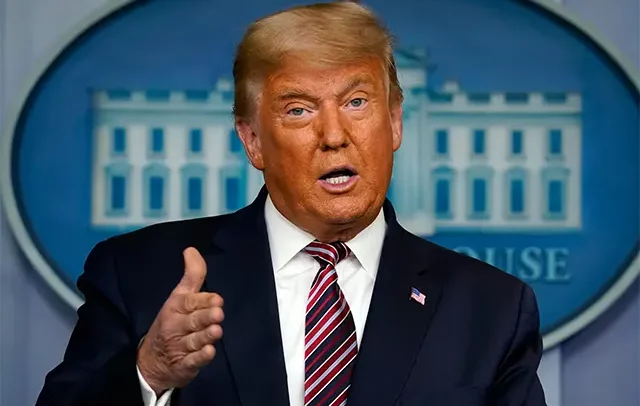
President Donald Trump
The United States has announced a suspension of immigrant visa processing for citizens of Ghana and 74 other countries, marking the latest move by President Donald Trump’s administration to tighten controls on foreign entry into the country.
The decision, announced yesterday, will take effect from January 21, 2026, and will remain in force indefinitely, pending a comprehensive review of America’s screening and vetting procedures for immigrants.
A spokesperson for the US State Department confirmed the development, saying, “The State Department is pausing immigrant visa processing for 75 countries.”
According to Fox News Digital, an internal memo sighted indicated that consular officers had been instructed to refuse immigrant visa applications under existing law while the department reassesses its security protocols.
The suspension affects a wide geographical spread, with Africa accounting for the largest number of impacted countries.
Ghana is among 27 African nations affected, alongside Nigeria, Egypt, Ethiopia, Liberia, Sierra Leone, Senegal and Somalia, among others.
In Asia, 22 countries including Afghanistan, Iran, Pakistan, Iraq and Syria are listed. Eight European countries, including Russia and the Balkan states of Albania and Bosnia, are also affected.
In the Americas, 13 countries across North America and the Caribbean have been named, including Jamaica, Haiti, Cuba and several Eastern Caribbean states.
South America accounts for three countries. They are Brazil, Colombia and Uruguay, while Fiji is the sole country affected in Oceania.
In total, the suspension impacts 27 countries in Africa, 22 in Asia, eight in Europe, 13 in North America and the Caribbean, three in South America and one in Oceania.
US officials said the move is aimed at strengthening national security and ensuring more robust background checks for prospective immigrants.
However, the decision is expected to affect thousands of individuals seeking permanent residence in the United States, and is likely to reignite debate over the administration’s immigration policies.
By Ernest Kofi Adu