
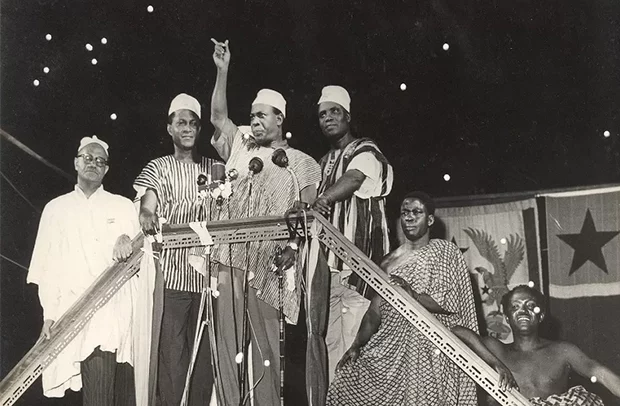
Yesterday, the annual commemoration of the lowering of the Union Jack and the replacement of same with the freshly minted Ghana’s was observed across the country.
Characterised by the routine blablabla rhetoric by politicians at the helm of the ship of state, we were unable to, as it should have been the case, reflect sincerely on the journey so far. What have we achieved or not?
So many years, we are still groping in the dark with a resetting agenda.
There is a lot to write about this country whose contemporaries elsewhere have done far better in terms of development and the bettering of the lives of their people.
Effective and sincere leadership continue to elude us even as we pretend to be doing well under the circumstances.
Yes, we managed to extricate ourselves from the apron string of the colonialists, but have we achieved our dreams?
When Dr. Kwame Nkrumah said the black man is capable of managing his affairs, he certainly meant we would be better off being in charge of ourselves.
So much water has passed under the bridge since March 6, 1957, which puts us in a prime position to assess ourselves. By contextualising what Kwame Nkrumah and other nationalists expected of a post-independent Ghana at the time our new flag fluttered for the first time against the prevailing circumstances today, seventy years less one age of the country, we do not deserve much plaudits.
A one-party state, coups and a so-called revolution, all of which developments were played out because of existential governance challenges, have denied us progress.
Kwame Nkrumah was overthrown at a time when the country, some would argue, was primed for a military takeover, dictatorship and intolerance as evidenced by the Preventive Detention Act (PDA). When therefore the Central Intelligence Agency (CIA) exploited the prevailing negative winds at the time, the coup succeeded, passing off as a popular intervention.
The National Liberation Council (NLC) which replaced the one-party state of the deposed Kwame Nkrumah played their part and handed over.
As to whether they succeeded in altering the lot of the Ghanaian, which they said they had come to do, the scorecard is not impressive although the change in the political climate was relieving albeit, temporarily.
The tapestry of coups and return to democratic rule neither earned us the stability tag nor the development dangled in our faces.
The so-called revolution which changed the course of our political history under which junta Ghana lived for so long, was laden with varied human rights abuses.
The bloody intervention did not change the mindset of the Ghanaian; public service continues to be riddled with corruption, something which the architects of the revolution claimed they had come to reverse after murdering retired Generals and collapsing the businesses of Ghanaians.
Industries set up during the industrialisation drive of the First Republic have all faded into the forgotten chapters of our history.
Imports of flimsy items which could have been produced locally remains an order of the economy, leaving us to perpetually grapple with the unending struggle to keep the national currency afloat.
Illegal mining remains a headache of the country even as politicians at the helm pretend to be fighting it, and sadly some of them partaking in the environmental loot.
Progress is jerky, the continuum element of governance remains on the pages of governance documents hardly practised. New governments, when they take over, bastardise what their predecessors started and abandon them. New ones are initiated with glaring procurement breaches.
Yes, we are independent of colonial Britain but our scorecard in terms of achievements can be measured only in terms of identifiable infrastructure. One step forward, two steps backwards, especially when governments change.