
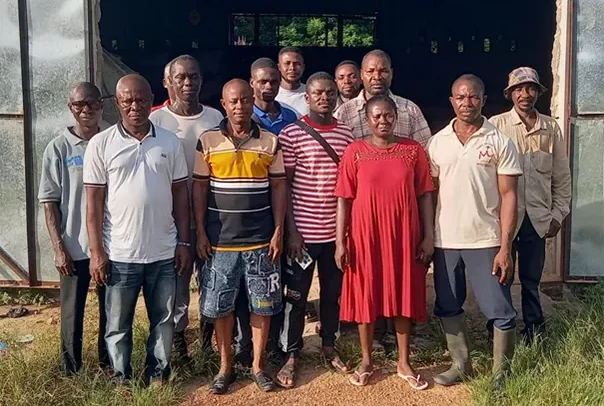
The rice farmers
Rice farmers in the Afadzato South District of the Volta Region are calling on the government to urgently intervene to stem mounting post-harvest losses that are threatening their livelihoods and the future of rice production in the area.
The farmers said they are unable to sell rice harvested last year, repay loans, or adequately prepare for the upcoming farming season because of inadequate infrastructure and limited support services.
Speaking to the media, the spokesperson for the Afadzato South Farmers Association, Dickson Kodzo Addo, attributed the crisis to the absence of a rice processing facility in the district. He said the lack of a functional rice mill has left much of their harvest unsellable.
According to him, efforts to engage the National Buffer Stock Company have yielded no results because the agency only purchases processed rice.
Mr. Addo stressed that establishing a rice processing plant in the district would enable farmers to mill their paddy rice and supply it to second-cycle institutions in the area, creating a ready market and helping them generate income to repay loans and support their families.
“We have the market, especially with the number of schools around, but without processing, we cannot meet the requirements,” he said.
Another farmer, Samuel Wonaglo, said the only rice mill serving the district and neighbouring communities is privately owned and has been out of operation for several weeks due to a faulty transformer, worsening the plight of farmers.
He also lamented the lack of storage facilities, explaining that farmers are forced to keep large quantities of paddy rice in their homes under poor conditions, exposing the produce to spoilage and significant losses.
Afeti Peace Dela raised concerns about the high cost of harvesting, stating that farmers currently pay between GH₵800 and GH₵1,000 per acre because there are no government-supported farming centres to subsidise such services.
She urged the government to consider reducing the cost of fertilisers rather than distributing limited quantities free of charge, noting that the amounts supplied are often inadequate and compel farmers to buy additional inputs at high market prices.
Adding his voice, Peter Kornu said the government’s commitment to youth empowerment should include addressing the challenges confronting farmers.
He warned that the difficulties in rice production are discouraging young people from venturing into agriculture.
He also questioned the push for local rice consumption when producers are unable to sell their produce, revealing that he currently has more than 100 bags of paddy rice without buyers.
Mr. Edward Tyson Mensah also highlighted the sharp decline in prices, noting that a “number 4” bag of paddy rice, which previously sold for GH₵600, now sells for as low as GH₵280, with demand still remaining weak.
He said the financial strain would significantly affect his output this year, as he plans to cultivate only 10 acres compared to 20 acres last season.
The farmers are therefore appealing to the government to urgently provide processing facilities, storage infrastructure and affordable agricultural inputs to sustain rice production and promote the consumption of locally produced rice in the country.
By Daniel K. Orlando