
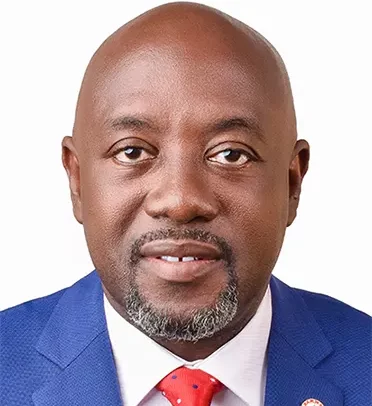
Nana Osei-Adjei
New Juaben North Member of Parliament (MP), Nana Osei-Adjei, has emphasised the need for the country to strengthen economic buffers to guard against external shocks as it prepares to exit its International Monetary Fund (IMF) programme in the coming months.
Speaking in an interview on the sidelines of the IMF-World Bank Spring Meetings in Washington, Mr. Osei-Adjei, who is also Parliament’s Public Accounts Committee member, said recent positive revisions to the country’s growth outlook by the IMF should not lead to complacency given rising global uncertainty.
The IMF revised Ghana’s growth projection upward, even as it cut forecasts for global growth amid escalating geopolitical tensions, including the conflict in the Middle East.
Mr. Osei-Adjei said the divergence underscored the volatility of the global environment and the need for the country to prepare for sudden external shocks.
“If this war continues, it’s going to have a big effect on the economy of the world,” he said, referring to rising global uncertainty linked to the Middle East conflict and broader geopolitical tensions.
He said Ghana’s improved growth outlook should be seen in the context of fragile global conditions, where inflation expectations have been revised upward in several economies while growth forecasts have been downgraded elsewhere.
Mr. Osei-Adjei pointed to lessons from recent crises, including the COVID-19 pandemic, when Ghana’s economy came under severe strain.
“You see, when COVID struck, our economy just came to a standstill and things were very difficult for us,” he said, adding that the experience highlighted the importance of fiscal preparedness.
The lawmaker urged policymakers to prioritise the accumulation of fiscal buffers to enhance resilience against future shocks, including commodity price volatility, global financial tightening and geopolitical disruptions.
“We should as well build buffers so that the economy will be resilient in case the global outlook changes,” he said.
The comments come as Ghana prepares to exit its IMF-supported programme, which has anchored a series of fiscal and monetary reforms aimed at stabilising inflation, restoring debt sustainability and strengthening external balances.
The IMF has not publicly detailed Ghana’s final exit timeline, but authorities in Accra have signalled that the programme could conclude in the coming months if key targets are met.
Osei-Adjei said the government must ensure that reforms implemented under the programme are sustained beyond its conclusion, warning against policy slippage once external oversight diminishes.
He stressed that maintaining macroeconomic discipline would be essential to preserving recent gains, particularly in inflation control and exchange rate stability.
Ghana’s economy has faced significant pressure in recent years, driven by high inflation, debt restructuring challenges and currency depreciation, forcing the government to seek IMF support in 2023.
Since then, policymakers have implemented fiscal consolidation measures, subsidy reforms and tighter monetary policy settings to stabilise the macroeconomic environment.
Mr. Osei-Adjei’s remarks reflect broader concerns among policymakers across sub-Saharan Africa about the durability of post-crisis recoveries in the face of persistent global volatility.
He said the current environment, shaped by geopolitical tensions and shifting commodity prices, requires proactive economic management rather than reliance on short-term improvements in growth indicators.
“Managers of the economy should build buffers for the economy to be resilient,” he said.
A Daily Guide Report