

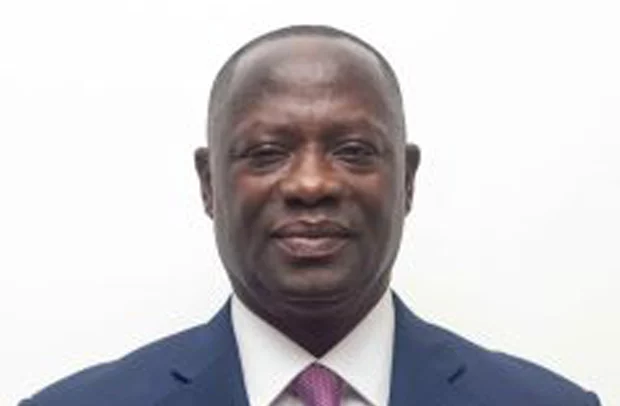
Emmanuel Armah-Kofi Buah
The government has withdrawn its controversial lithium mining agreement with Barari DV Limited from Parliament, bowing to pressure for broader consultations following strong objections from the Minority, civil society groups and experts in the extractives sector.
The Deputy Minister for Lands and Natural Resources, Alhaji Yusif Sulemana, who announced the withdrawal yesterday, told Parliament that concerns raised across the political divide made the decision straightforward.
He noted that civil society groups and influential voices in the mining industry had also urged government to deepen technical reviews and stakeholder engagement before resubmitting the deal.
His announcement drew a sharp reaction from New Patriotic Party (NPP) Member of Parliament (MP) for Okaikwei South, Patrick Yaw Boamah, who insisted the Minority had long warned that the agreement was not in the national interest.
Tensions over the deal intensified on November 12, 2025, when government reintroduced the lease agreement with Barari DV to Parliament.
Former Lands and Natural Resources Minister and MP for Damongo, Samuel Abu Jinapor, led the opposition to the revised terms, accusing the current administration of presenting an inferior arrangement compared to the one negotiated under the Akufo-Addo government, an agreement the then-Minority National Democratic Congress (NDC) had itself opposed. Addressing journalists after the document was laid, Mr. Jinapor described the new proposal as “a much worse form of agreement,” arguing that it strips away important protections and benefits secured in the earlier deal.
He maintained that the previous arrangement offered superior financial returns and stronger guarantees for local participation, and said the revised terms leave Ghana in a weaker position.
Mr. Jinapor urged President John Dramani Mahama to re-examine the agreement and direct the Lands Ministry back to the negotiation table if necessary, arguing that the country’s natural resources must be managed in the interest of citizens.
But the Minister for Lands and Natural Resources, Emmanuel Armah-Kofi Buah, rejected the opposition’s claims.
He defended the new agreement as a pragmatic approach that introduces a scaled royalty system designed to make the project commercially viable while ensuring long-term benefits for the state.
He explained that starting with a 5 per cent royalty is necessary because global lithium prices are currently lower, and that the rate will rise to 10 per cent as prices increase.
According to him, maintaining a flat 10 per cent rate under current conditions would render the project unprofitable and deter investment.
Mr. Buah insisted that the agreement is aimed at boosting employment and industrial development, particularly in the Mankessim area where land has already been secured.
He maintained that the flexible royalty structure is ultimately in the best interest of Ghanaians, stressing that government is focused on jobs, economic opportunities and long-term value creation.
By Ernest Kofi Adu, Parliament House