
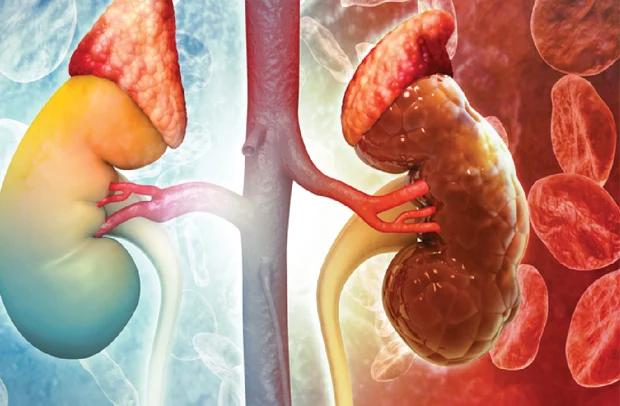
We do not know what number of persons suffering from an ailment can pass for a health emergency. This, notwithstanding, we think that four million victims of kidney ailment out of a population of thirty million or so can be described as such.
A couple of days ago, the scary information about so many persons suffering from kidney ailments was relayed to the country.
Considering the importance of this organ in the human being alongside the stressful or expensive cost associated with managing the various stages of this health predicament, it can be said without dispute that the country is in trouble, especially when the experts tell us that a segment of victims are kids.
The figure is so high that the issue of government footing the cost of dialysis, a medical intervention which does the work of the non-functioning organ, was considered by the past Akufo-Addo government.
An expensive venture that is, it is such a drain on the national coffers, but being a social intervention emergency, government went ahead with it.
Since lifestyle habits and some foods can cause the health challenge, the Food and Drugs Authority (FDA) has an exceptional role to play in ensuring that the incidence of kidney diseases is brought to a minimum. Non-opioid drug abuse such as herbal concoctions and painkillers or analgesics is on the rise, a trend the experts say is partly responsible for the uptick in kidney disease cases.
In a country where close to 90 percent of radio commercials are about herbal medicines, most of them aphrodisiacs and bitters, the reality of kidney malfunction is unsurprising.
We wish to appreciate the challenges being faced by the FDA in enforcing standards that would ensure that toxic medicines are not dispensed to Ghanaians – logistics and the stubbornness of the average Ghanaian user of such herbs.
We have noticed the blatant abuse of FDA labels of approval by some of the producers of the drugs under review.
The budgetary constraint of the FDA notwithstanding, it is our opinion that the authority should embark upon a nationwide campaign alongside officials of the Ghana Health Service to educate Ghanaians about the functions of the kidney and what can compromise its efficiency.
Most of those who patronise the toxic medicines do not know what they are doing to their health, but with education, it is our position that they would advise themselves accordingly.
The FDA should also ensure that their labels of approval are not abused by arresting those who do so and having them prosecuted.
Liaising with radio stations so these channels are not used to advertise poisonous herbs and so-called aphrodisiacs is also encouraged.
Herbal medicine is part of our culture and have served us well over the years. It is this recognition which has led to hospitals carving a role for this segment of our traditional medical practice. Indeed, the Kwame Nkrumah University of Science and Technology in Kumasi trains herbal practitioners on best practices.
The foregone is evidence of the importance of traditional herbal medical practice, but with crooks invading the system, this vital organ, kidney, will be the loser.
An eye should also be on food preparers and sellers whose obsession for cutting corners has led them to add dangerous stuff to their culinary occupation, which has not been helpful to the wellbeing of their patrons.
Kidney diseases are very expensive to manage, hence the need to avoid the ingestion of food and drugs which can compromise its integrity. Four million persons suffering from this various stages of kidney diseases is just too high and, certainly, a health emergency, because the figure does not appear to be declining.