

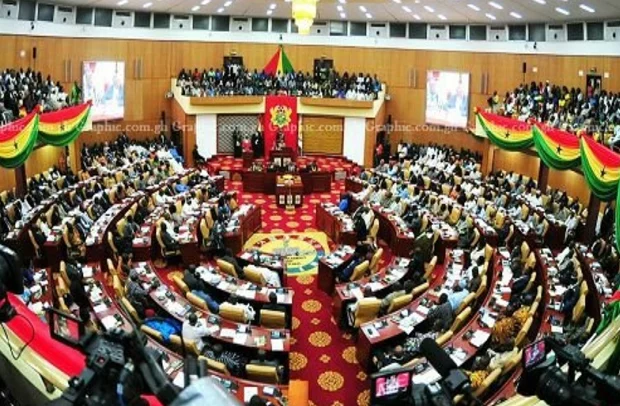
Government has taken a major step toward legalising commercial motorcycle transport, popularly known as okada, with the introduction of the Road Traffic (Amendment) Bill, 2025 in Parliament yesterday.
The bill, which underwent its First Reading, seeks to revise the existing Road Traffic Regulations (L.I. 2180) to formally recognise motorcycle taxis as an approved mode of commercial passenger transport.
The Minister for Transport, Joseph Bukari Nikpe, who laid the bill, explained that the amendments are aimed at modernising the regulatory framework for road transport and addressing long-standing realities on the country’s roads.
He said the proposal will not only legalise okada but also introduce new safety standards, including adjustments to seat belt regulations and a stricter alcohol limit for drivers, reducing the permissible blood alcohol concentration from 0.08 to 0.05 percent.
According to the Minister, the amendments will ensure safer mobility, protect riders and passengers, and bring an already widespread informal transport industry under proper regulation and enforcement.
Mahama’s Long-Standing Promise
The move aligns with President John Mahama’s long-standing position on legalising okada operations. During an interaction with motorbike riders in Ashaiman on May 31, 2024, President Mahama reiterated that a National Democratic Congress (NDC) government would legalise and regulate commercial motorbike transport to create jobs and formalise the sector.
“We have in our manifesto that we will legalise okada, but we lost the elections and so that promise was not fulfilled. Our opponents objected, claiming okada activities, if operationalised, will cause accidents,” President Mahama told riders at the time.
Other Bills Before the House
Parliament also took the First Reading of the Bank of Ghana (Amendment) Bill, 2025, which seeks to further strengthen the independence of the central bank and tighten limitations on monetary financing.
Deputy Minister for Finance, Thomas Nyarko Ampem, who presented the bill, said the amendments aim to reinforce macroeconomic stability, safeguard monetary policy decisions from political cycles, and ensure compliance with modern central banking standards.
Both bills have been referred to the appropriate parliamentary committees for consideration and subsequent reporting to the House.
By Ernest Kofi Adu, Parliament House