
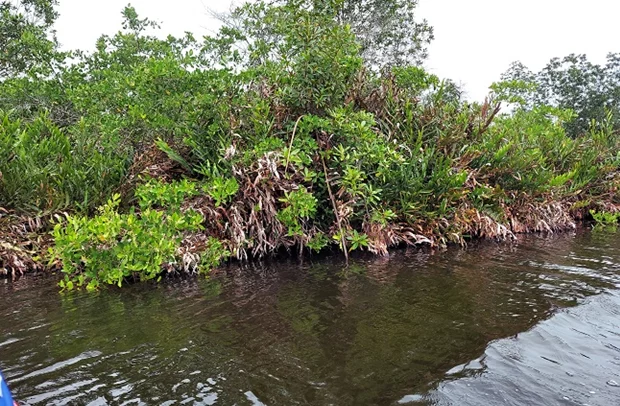
Keta Ramsar site
Among the world’s most productive ecosystems are wetlands, which support exceptionally high concentrations of birds, mammals, reptiles, amphibians, fish, and invertebrate species.
To better contextualise their importance, it is essential to understand what wetlands are. According to Article 1.1 of the Convention on Wetlands, also known as the Ramsar Convention (1971), wetlands are defined as: “areas of marsh, fen, peatland or water, whether natural or artificial, permanent or temporary, with water that is static or flowing, fresh, brackish or salt, including areas of marine water the depth of which at low tide does not exceed six metres.”
For the purposes of protecting sites adjacent to wetlands, Article 2.1 of the Convention further clarifies that wetland: “may incorporate riparian and coastal zones adjacent to the wetlands, and islands or bodies of marine water deeper than six metres at low tide lying within the wetlands.”
While the Convention has classified wetlands into 42 types, five major wetland types are generally recognized:
- Marine (coastal wetlands including coastal lagoons, rocky shores, and coral reefs);
- Estuarine (including deltas, tidal marshes, and mangrove swamps);
- Lacustrine (wetlands associated with lakes);
- Riverine (wetlands along rivers and streams); and
- Palustrine (meaning “marshy,” including marshes, swamps, and bogs).
These classifications are further grouped under three broad categories: Marine and Coastal Wetlands, Inland Wetlands, and Human-made Wetlands.
Human-made wetlands include fish and shrimp ponds, farm ponds, irrigated agricultural land, salt pans, reservoirs, gravel pits, sewage farms, and canals.
From this definition and classification, wetlands are recognized as critical ecosystems that support biodiversity, regulate water systems, mitigate flooding, and purify water, while also providing significant socio-economic benefits, including livelihoods, natural resources, food production, and domestic water supply.
Ghana became a contracting party to the Ramsar Convention on Wetlands in 1988, reflecting a longstanding commitment to the conservation and sustainable use of wetlands.
Through the designation of six Ramsar sites – the Keta Lagoon Ramsar Complex, Densu Delta, Muni–Pomadze, Sakumo, Songor, and the Owabi Wildlife Sanctuary–covering a total surface area of 205,162 hectares, the Government of Ghana has sought to conserve biodiversity, protect livelihoods, and integrate wetlands into national development strategies.
The Wildlife Division of the Forestry Commission, working in collaboration with local authorities, traditional institutions, civil society organizations, and research bodies, has advanced the management of these sites through legal frameworks, community-based approaches, and public education programmes, including World Wetlands Day celebrations.
Implementation of these measures also aligns with Ghana’s commitments under the Convention on Biological Diversity (CBD) and contributes to the achievement of the Sustainable Development Goals (SDGs), particularly SDG 6 (Clean Water and Sanitation), SDG 13 (Climate Action), SDG 14 (Life Below Water), and SDG 15 (Life on Land).
The Case for the Keta Lagoon Ramsar Complex
The Keta Lagoon, Ghana’s largest lagoon system, is of exceptional ecological, socio-cultural, and economic significance.
It spans approximately 120 km² and supports over 200 fish species, including economically important species such as tilapia, bonga, and mullet. The lagoon sustains the livelihoods of an estimated 50,000 people, primarily from the Anlo State and surrounding communities, who rely on artisanal fishing, salt production, and agriculture.
Beyond food security, the lagoon acts as a natural buffer against coastal erosion, and yet the system is losing an estimated 30–40 meters of shoreline per year due to sea-level rise, sediment disruption, and sand mining.
The lagoon is also critical for biodiversity, hosting migratory waterbirds along the East Atlantic Flyway, wetland vegetation that stabilizes soils, and habitats for endemic species. Its sustainable management is therefore central to Ghana’s blue economy, supporting fisheries, aquaculture, and tourism, while advancing ecosystem-based climate adaptation.
Despite its Ramsar designation, Keta Lagoon faces growing threats from pollution, hydrological changes, and unsustainable land use. Strengthening the lagoon’s protection requires science-based monitoring, restoration programs, and community co-management, recognizing the Anlo people’s traditional stewardship. Doing so aligns directly with Ghana’s Ramsar obligations, the CBD’s global biodiversity target 2, and national strategies for climate resilience and sustainable development.
HATOF Foundation, therefore, calls for increased investment in the Keta Lagoon Ramsar Complex as a national and regional priority, ensuring that biodiversity, local livelihoods, and the blue economy are safeguarded for present and future generations.
Source: HATOF Foundation