

90% Of Girls In The Northern Have Experienced SGBV – Study
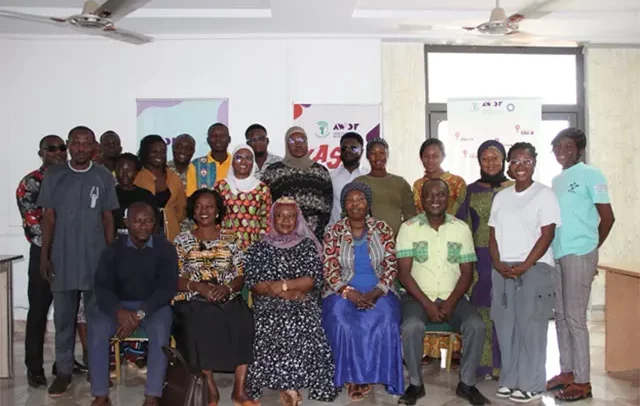
A new study by Total Life Enhancement Centre Ghana (TOLECGH), has revealed alarmingly high levels of sexual and gender‑based violence (SGBV) affecting women and teenage girls across Northern Ghana showing the psychological toll of a growing social menace.
The study funded by the African Women’s Development Fund (AWDF) and led by SWIDA Ghana applied the mixed‑methods approach surveying 512 teenage girls across Tamale, Sagnerigu and Walewale using multistage sampling.
The Survey was complemented with 15 focus group discussions (FGDs), 20 in‑depth interviews with survivors and 15 key‑informant interviews with professionals and community leaders.
The respondents, aged 13–18 years (46.7%); 76.8% were Muslim, 20.3% Christian, and 76.6% had SHS education. Most (70.7%) lived with families, while 65.8% lived within low-income households.
The results showed that 90% experienced SGBV, with 41.4% occurred once, 38.1% occasionally observed in the form of emotional (35%), physical/verbal (25%), sexual (20%), and economic (10%) abuse, mainly at home (55.1%), schools (34.7%) and workplace (10.2%).
Psychological distress affected 79.7%; 32.1% had depression, 51.3% anxiety, and 25.3% stress, with 54% Post-Traumatic Stress Disorder (PTSD).
Barriers to seeking support included stigma (32.2%), low awareness (26.6%), and financial constraints (25%) with cultural triggers to SGBV included patriarchy (19.1%), polygamy (15.6%), and victim-blaming (10.5%). Most communities blame victims (48.8%).
Speaking to journalists, lead researcher, Peter Mintir Amadu, a psychologist and lecturer at the University for Development Studies and founder of TOLECGH, said the findings is a wakeup call for policymakers, community leaders and service providers.
“SGBV is not only a violation of rights, it is destroying lives, mental health and futures,” he said.
The Psychologist and Lecturer, expressed worry that despite 65% awareness of services availability, only 40% used them.
“There’s 65% awareness of sexual and gender‑based violence and services but the scary part is that very few are making use of this services and this is because of stigma, financial constrain which has affected individuals who are in need,” he said.
He called for the expansion of the expansion of Mental‑Health and Psychosocial Support Services (MHPSS) tailored to survivors, with trained, confidential and accessible counselors, strengthening policy and institutional frameworks to ensure accountability, protection and survivor access to justice, invest in community‑based prevention campaigns to challenge patriarchal norms, reduce victim‑blaming and raise awareness of services.
Furthermore he called for an improved coordination between community leaders, schools, health services and law‑enforcement to create integrated referral systems and provide financial and educational support to reduce economic dependence that can trap survivors in abusive situations.
Mr. Amadu called for a comprehensive intervention including mental health and Psychosocial support services (MHPSS), policy reform, and community-based prevention.
“Holistic improvement of MHPSS, awareness, and gender-sensitive approaches are critical to supporting survivors and promoting safer communities for women and girls in Northern Ghana,” he stated.
Executive Director of SWIDA Ghana, Hajia Alima Sagito‑Saeed, said there is a need for data on sexual and gender‑based violence to help institutions working to address the problem.
“There is a need for data on sexual and gender‑based violence for advocacy and other related purposes,” she said.
She called on the public to work with relevant stakeholders to combat sexual and gender‑based violence in their communities.
“We must acknowledge that sexual and gender‑based violence exists and that everyone needs to be on board to fight it,” she stressed.
Some quotes from participants read, “People think we are different or cursed. Some even believe sleeping with us brings good luck. Because of that, many of us are targeted for sexual abuse. The fear and shame never leave you, and we get little protection or justice.”
“Sometimes, even people who are supposed to protect us take advantage because they think no one will believe us. We live in fear every day,” the participant said.
“As a woman, I face double discrimination. Men harass me, saying I am special or rare, but they don’t respect me. When I was attacked, no one took it seriously. We need counselling, legal help, and a system that protects people like us.”
FROM Eric Kombat, Tamale