
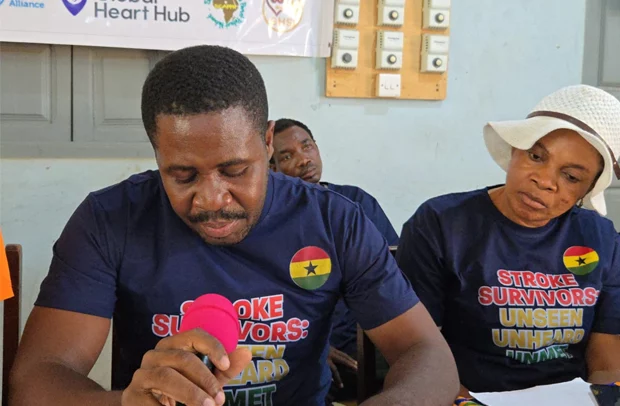
Callistus Edoh
Stroke survivors have renewed calls for urgent reforms to ensure inclusive healthcare across the country as they commemorate National Stroke Survivors Day, observed annually to raise awareness about stroke, its long-term impact, and the challenges faced by survivors and their caregivers nationwide.
Speaking at a press conference, the Regional Chairman of the Stroke Association Support Network (SASNET) Ghana, Callistus Edoh, said this year’s theme, “Stroke Survivors: Unseen, Unheard and Unmet,” is a reflection of the neglected realities confronting survivors. He stated that many stroke-related difficulties, including cognitive and emotional challenges, remain largely invisible, while survivors are often excluded from policy discussions and lack access to essential healthcare services.
Mr. Edoh cited a recent incident in which a stroke survivor reportedly died after being denied oxygen due to complications with National Health Insurance Scheme (NHIS) coverage.
According to him, the patient was discharged without treatment, underscoring systemic gaps in healthcare delivery. He described the situation as unacceptable and called for immediate government intervention to prevent similar occurrences.
Data from the Ghana Health Service indicate that stroke remains one of the leading causes of death and disability in the country, with more than 30,000 new cases recorded annually. Survivors often endure significant physical, emotional, and financial burdens, compounded by limited access to timely diagnosis, inadequate rehabilitation services, and the high cost of assistive technologies.
Health experts and advocates are therefore calling on government to clarify NHIS coverage for stroke treatment and rehabilitation. They also want the swift implementation of the National Assistive Technology Policy and the Community-Based Rehabilitation (CBR) Policy, both of which are yet to be fully operationalised. According to stakeholders, these policies are critical to improving access to care and enhancing the quality of life for survivors.
Executive Director of SASNET Ghana, Ebenezer Adams, emphasised the need for expanded support systems, including access to assistive devices such as wheelchairs and increased enrolment of stroke survivors onto social protection programmes like Livelihood Empowerment Programme (LEAP). He also urged authorities to clearly define the scope of support under initiatives such as the Ghana Medical Trust Fund (Mahama Cares) programme to ease the financial burden on affected individuals.
Stroke survivors who shared their experiences described significant challenges in accessing healthcare services. They cited long waiting times at outpatient departments, inadequate attention from health professionals, and difficulties in accessing physiotherapy services.
One survivor, Millicent Adetti, recounted delays in receiving treatment for a stroke-related condition, attributing it to systemic inefficiencies within the healthcare system.
They further warned that failure to address these challenges could have serious economic and public health consequences. They estimate that stroke-related productivity losses could significantly impact Ghana’s economy, while inadequate care continues to contribute to high mortality rates and reduced quality of life.
The group therefore urged government to invest in preventive healthcare, intensify public education on stroke risk factors, and expand rehabilitation services nationwide to reduce the growing burden of the disease.
FROM Daniel K. Orlando, Ho