
Ghana Catholic Bishops’ Conference
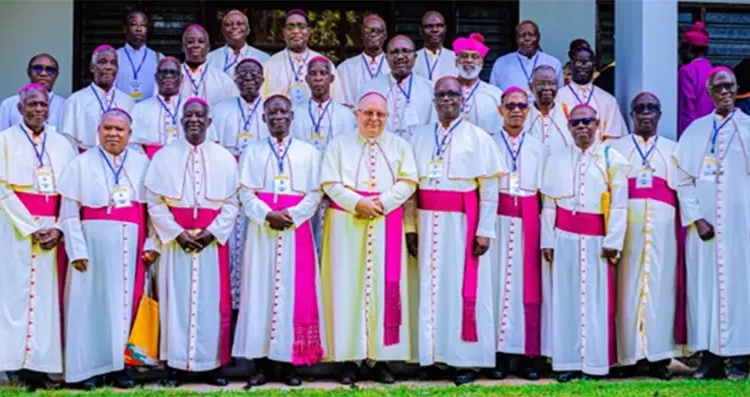
The Ghana Catholic Bishops’ Conference has reaffirmed the Church’s moral duty to speak on national issues, stressing that its engagement in public discourse is rooted in a divine mandate rather than political activism.
In a statement signed by its President, Most Rev. Matthew Kwasi Gyamfi, the Conference said the Church cannot remain silent on matters affecting human dignity, social justice, and the environment, including the impact of illegal mining.
“The Church, by her nature and divine mandate, cannot remain silent in the face of moral and social concerns. When issues arise that threaten human dignity, the integrity of creation, or the common good… the Church has both the right and the duty to speak. This is not partisan politics; it is a moral responsibility rooted in the Gospel,” the statement said.
The Bishops emphasised that while the Church respects the distinction between religious and political authority in a democratic society, that boundary should not limit its responsibility to serve as a moral voice.
“The Church does not seek power but strives to illuminate public life with truth. When she speaks on justice, peace, and care for creation, she does so as a moral guide concerned for all,” it added.
The statement follows recent public remarks attributed to Dr. Mary Awusi, Chief Executive Officer of the Ghana Free Zones Authority, who cautioned that the Chairman of the Church of Pentecost, Apostle Eric Kwabena Nyamekye, could be regarded as a politician if he continues to comment on national issues such as illegal mining.
Although the Bishops acknowledged that Dr. Awusi has since apologised, they expressed concern that such comments risk undermining respectful public discourse and narrowing the space for ethical engagement.
“Statements that equate moral witness with political partisanship risk narrowing the space for ethical reflection,” the Bishops noted, urging public officials to promote dialogue grounded in mutual respect.
The Bishops also called on clergy and lay leaders to remain committed to truth and moral clarity, while encouraging political actors to remain open to the contributions of faith-based institutions in national development.
They commended members of the Christian community for what they described as a measured and respectful response to the controversy, noting that it reflected responsible leadership.
The Conference further called for unity, dialogue, and peace, and offered prayers for divine guidance for Ghana’s leaders and citizens.
By Florence Asamoah Adom