
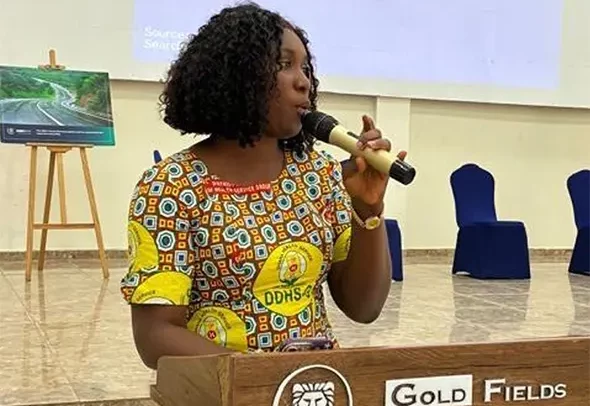
Wilhemina Tiwaa Duah
The Tarkwa-Nsuaem Municipality of the Western Region recorded an alarming rate of malaria cases, from the Out Patient Department (OPD) of the various health facilities in the area, last year.
The municipality recorded a total of 160,474 suspected malaria cases out of which 53,037 tested positive for the disease.
When it comes to pregnant women, the municipality recorded 628 suspected cases. Out of the number, 224 tested positive for malaria.
The Tarkwa-Nsuaem Municipal Health Director, Madam Wilhemina Tiwaa Duah, revealed this at a community engagement programme to mark this year’s World Malaria Day.
The programme, which was organised by the Gold Fields Ghana Foundation (GFGF), was aimed at strengthening awareness, prevention and collective action against malaria.
The event was held under the theme “Driven to End Malaria: Now We Can. Now We Must”.
Madam Duah noted that malaria remains one of the most pressing public health challenges in Ghana, particularly within the Tarkwa-Nsuaem and Prestea/Huni-Valley municipalities, where transmission rates continue to be significant.
She indicated that with all the interventions that had been put across, the rate of malaria cases among pregnant women in Tarkwa-Nsuaem is alarming.
She noted that the disease can lead to premature delivery, still birth, and can abort a foetus.
To this end, she encouraged the people to ensure clean surroundings, reduce stagnant water, and promote sustained community-led hygiene practices, adding “So that we can move closer to malaria-free future for our communities.”
Abdel Razak Yakubu, Executive Secretary of GFGF, noted that the programme was designed not only to educate but also to empower communities with practical tools and knowledge to actively participate in prevention efforts.
He mentioned that key highlights of the event included stakeholder panel discussion, where participants deliberated on malaria transmission and sustainable prevention strategies.
He disclosed that weed slashers were distributed to all host communities to support regular environmental sanitation activities.
From Emmanuel Opoku, Takoradi