
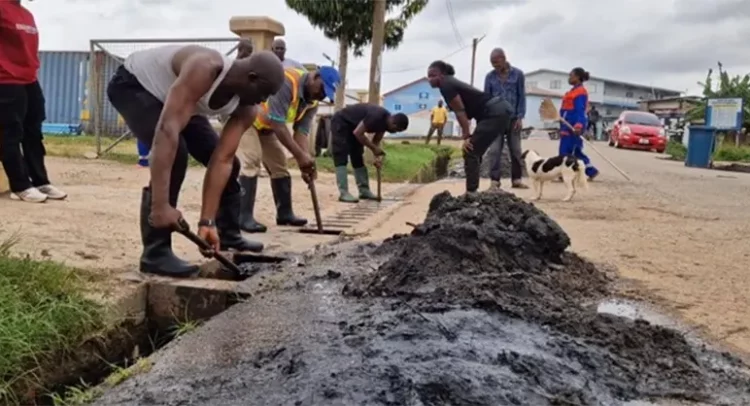
Some residents desilting choked drain
Hundreds of residents across parts of the Western Region joined the nationwide clean-up exercise over the weekend, as communities rallied to improve sanitation and support the government’s post-flood mitigation efforts.
The two-day exercise, organised in the wake of recent flooding in parts of the country, aimed to clear waste, desilt drains and promote cleaner, healthier communities to reduce the risk of future floods and disease outbreaks.
Zoomlion Ghana Limited, the country’s leading waste management and environmental sanitation company, played a key role by deploying personnel and providing equipment to support the exercise.
The clean-up also attracted personnel from the Ghana Police Service, the Ghana National Fire Service and the Ghana Armed Forces, alongside officials from public and private institutions, senior high school students and residents.
A visit to Sekondi, Shama and the Effia Kwesimintsim Municipality (EKMA) showed teams desilting choked drains, sweeping streets and public spaces, clearing refuse dumps and cutting overgrown weeds.
Many residents described the exercise as timely and necessary, saying it would help improve sanitation and minimise the impact of flooding during the rainy season.
They commended Zoomlion for its commitment to the exercise and urged other corporate organisations to support similar environmental initiatives.
The Western Regional Minister, Joseph Nelson, stressed that maintaining a clean environment required sustained collaboration between citizens and local authorities.
He said environmental sanitation was a shared responsibility and encouraged residents to take ownership of sanitation activities by actively participating in future clean-up exercises.
Mr. Nelson noted that indiscriminate disposal of refuse and the failure to maintain drains remained major causes of flooding and the spread of preventable diseases, particularly during the rainy season.
The Chief of Apremdo in the Effia Kwesimintsim Municipality, Nana Egya Kwamena, called on residents to make sanitation a daily responsibility rather than limiting clean-up efforts to periodic national exercises.
He also advocated a greater role for traditional authorities in sanitation campaigns, arguing that their involvement would help improve public participation and strengthen community ownership of environmental management.
According to him, communities respond more enthusiastically when traditional leaders champion clean-up exercises than when such activities are driven solely by central or local government authorities.
From Emmanuel Opoku, Takoradi