
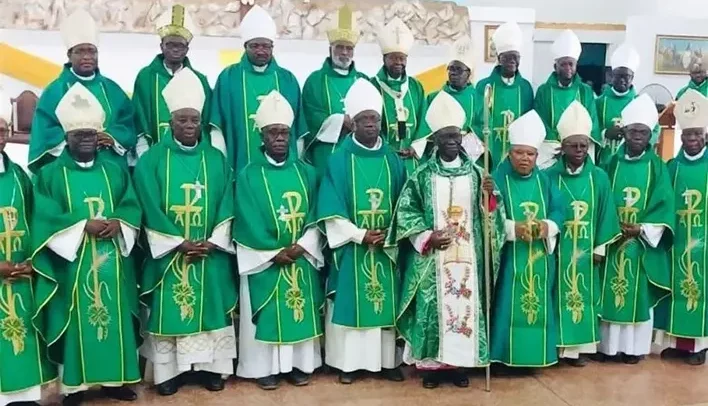
Ghana Catholic Bishops’ Conference
The Ghana Catholic Bishops’ Conference has strongly condemned the conduct of participants at the recent Karnival Kingdom Festival, describing reported incidents at the event as unacceptable and contrary to Ghana’s moral and legal standards.
In a statement issued on Monday, May 4, the Conference expressed deep concern over reports of public nudity during the festival, which was held from April 22 to 28. The Bishops noted that such behaviour is inconsistent with Ghanaian values and violates provisions of the Criminal Offences Act, 1960 (Act 29), which prohibits acts of public indecency.
“The event was an eyesore, denigrated our national values, and breached the laws of the land,” the statement said.
While acknowledging the importance of cultural exchange and the influence of international festivals, the Bishops cautioned that all such events must operate within Ghana’s legal framework and uphold acceptable public standards.
The Conference also raised concerns about the reported deployment of police officers to provide security during the festival. According to the Bishops, the presence of law enforcement personnel at the event raises serious questions about official oversight and the judgement exercised by security agencies.
“The presence of police protection for participants raises serious questions about official oversight,” the statement emphasised.
The Bishops have therefore called for a full-scale, independent investigation into how the event was approved and managed, including the role played by state security agencies. They stressed that the investigative process must be conducted without political interference.
“We urge all parties to allow the investigative process to proceed without undue political pressure,” the statement added.
The Conference proposed a review of procedures governing the issuance of permits for public events. It also called for the establishment of clearer guidelines on public decency, as well as a broader national dialogue on the acceptable limits of cultural expression.
The Bishops warned that any failure by state institutions to prevent or halt unlawful conduct risks eroding public confidence in governance and weakening respect for the rule of law.
From Daniel K. Orlando, Ho