
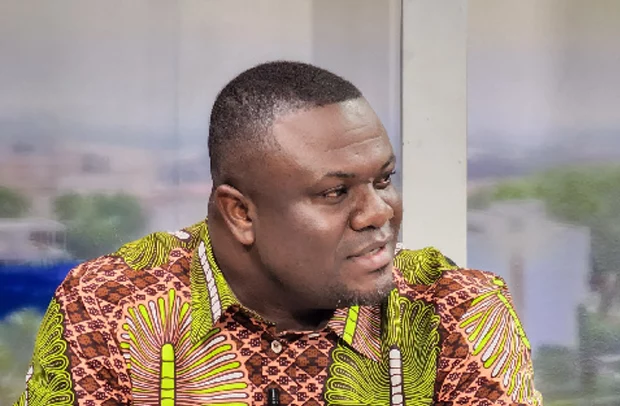
Collins Adomako-Mensah
The Minority in Parliament has blamed the government for the country’s persistent power outages, insisting the crisis predates the recent incident at the Akosombo Power Control Centre and is rooted in policy failures and mismanagement.
Addressing a press conference in Parliament yesterday, Deputy Ranking Member on the Energy Committee, Collins Adomako-Mensah, said the ongoing “dumsor” being experienced across the country cannot be attributed to the April 23 incident at Akosombo.
“I must state plainly and without qualification: Ghana’s power crisis which is popularly known as dumsor, was not caused by any accident at Akosombo. It was caused by this government,” he declared.
According to him, the Akosombo incident is only “the latest and most dramatic symptom” of a deteriorating power sector under what he described as incompetent leadership.
The Minority argued that long before the incident, Ghanaians had been grappling with widespread and unannounced outages, with communities experiencing prolonged blackouts, businesses incurring heavy losses, and hospitals relying on generators.
Mr. Adomako-Mensah said the government must take full responsibility for the situation, accusing it of attempting to use the Akosombo incident as an excuse for a crisis that has persisted for more than a year.
He also criticised President John Dramani Mahama’s earlier remarks that the outages were not “dumsor” but part of efforts to stabilise the power supply, describing the claim as misleading and out of touch with the reality on the ground.
The Minority further accused the government of abandoning the Energy Sector Recovery Programme (ESRP), a framework introduced by the previous administration to address financial and operational challenges in the power sector.
They argued that despite Ghana having installed generation capacity exceeding peak demand, the crisis has been driven by financial constraints, including unpaid obligations to Independent Power Producers (IPPs) and inefficiencies within the Electricity Company of Ghana (ECG).
On recent developments, the Minority criticised the decision by the Energy Minister, John Jinapor, to direct the GRIDCo Chief Executive Officer (CEO) to step aside, describing it as scapegoating rather than genuine accountability.
They maintained that leadership changes alone would not resolve the deep-rooted structural and financial challenges confronting the sector.
The group also raised concerns over the lack of transparency surrounding the GH¢1 “dumsor levy” imposed on fuel, questioning how much has been collected and how the funds have been utilised.
They called on the Ministries of Energy and Finance to present a detailed and independently verified report to Parliament on the levy.
The Minority further demanded immediate action to address the crisis, including the implementation of the ESRP, settlement of outstanding debts to IPPs, and a comprehensive audit of energy infrastructure across the country.
They also urged the Energy Minister to appear before Parliament to brief members on the state of the sector and outline a clear roadmap to end the outages.
“The lights were already going out across Ghana before anything happened at Akosombo,” Mr. Adomako-Mensah said, adding that the current situation reflects sustained policy failure rather than a single incident.
The Minority pledged to pursue parliamentary scrutiny of the energy sector, insisting that government must be held accountable for what they described as a deepening national crisis.
By Ernest Kofi Adu, Parliament House