

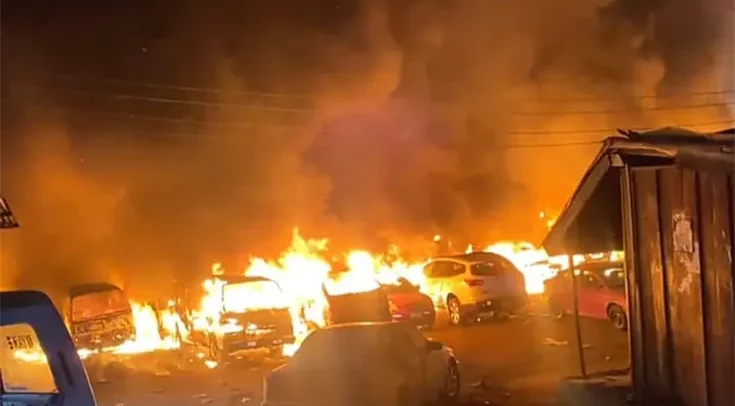
Some of the vehicles in flames
A massive fire outbreak on Sunday evening swept through the Sofoline mechanic enclave in the Kwadaso Municipality of the Ashanti Region, destroying more than 100 vehicles and valuable equipment, while raising serious concerns about emergency response after it emerged that no functional fire tender was available at the time of the incident.
The fire, which reportedly broke out around 7:00 p.m., spread rapidly through the tightly packed workshops, fed by flammable materials such as fuel, upholstery foam, lubricants and spare parts stored in the area. Mechanics and shop owners struggled desperately to save tools and customer vehicles, but the intensity of the blaze overwhelmed their efforts.
Eyewitnesses said personnel from the Ghana National Fire Service (GNFS) were not present as the fire raged. Some mechanics who rushed to a nearby fire station to seek help were reportedly informed that the fire tender had no water, a situation that allowed the blaze to continue unchecked and cause extensive destruction.
By the time the fire subsided, more than 100 vehicles, several engines and large quantities of upholstery materials had been reduced to ashes, with losses estimated to run into millions of cedis. Emotional scenes were witnessed as affected artisans lamented the loss of years of hard work and investment.
Although the official cause of the fire is yet to be established, some artisans believe it may have been triggered by a refuse dump that was allegedly set ablaze near one of the fitting shops earlier in the day. They suspect sparks from the burning refuse ignited nearby combustible materials.
No fatalities were recorded, but a few mechanics reportedly sustained minor injuries while attempting to salvage their belongings.
The incident has sparked public concern over fire safety and emergency preparedness in informal industrial areas, with affected workers appealing to authorities, the Kwadaso Municipal Assembly and benevolent organisations for support, while calling for urgent measures to prevent similar disasters in the future.
FROM David Afum, Kumasi