
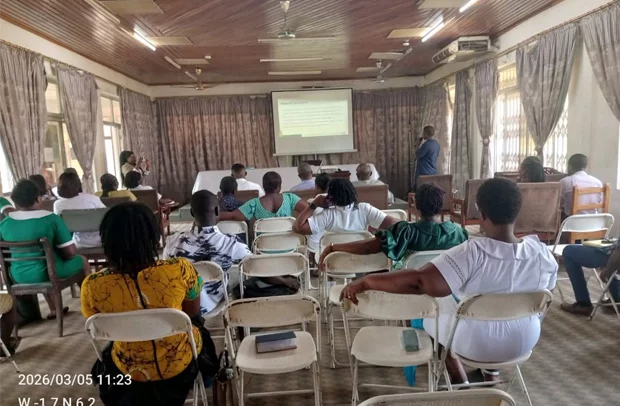
A section of stakeholders and health professionals at the event
Health authorities have revealed that malaria remains the leading cause of death in Obuasi and the Adansi area, accounting for about 79 percent of recorded deaths, according to officials of the Ghana Health Service (GHS).
The alarming statistics were disclosed during the Annual Performance Review Meeting organised by the Ghana Health Service for the six Adansi districts in Obuasi.
The meeting brought together health professionals and key stakeholders to review the performance of health facilities, identify gaps in service delivery and outline strategies to improve healthcare outcomes in the area.
Concerns Over Professional Conduct
During the meeting, a Public Health Nurse, Samuel Abu, raised concerns about the attitude of some health workers, particularly nurses, towards their duties and patients.
He noted that punctuality remains a challenge in some facilities, as some staff frequently report late to work.
Mr. Abu also expressed concern about instances of rude behaviour towards patients, warning that such attitudes could damage the reputation of health facilities.
According to him, poor interpersonal relations between health workers and patients often create negative public perceptions, which discourage people from seeking medical care at health facilities.
Call for Compassionate Healthcare
The Municipal Finance Officer, Zakaria Yahaya, supported the concerns and urged health workers to demonstrate empathy and fairness in the discharge of their duties.
He advised health personnel to treat all patients equally regardless of their economic status, behaviour or personal background.
He also stressed the importance of mutual respect among staff within the health sector, urging both supervisors and junior staff to maintain professional relationships that promote unity and cooperation.
According to him, a respectful and supportive working environment would ultimately improve healthcare delivery and enhance the quality of services provided to the public.
Need for Effective Supervision
The Acting Municipal Director of Health Services for Obuasi, Ransford Kwame Owusu, emphasised the need for compassion and dedication among healthcare workers.
He said passion for the profession should motivate health workers to provide quality care to patients and support one another in their duties.
Mr. Owusu also urged supervisors and facility heads to strengthen monitoring and supervision within their departments, to ensure that medical procedures and services meet the required standards.
He encouraged managers and facility in-charges to engage regularly with staff through open dialogue to address workplace challenges and improve service delivery.
Equipment Challenges
The Health Information Officer for Adansi North, Mahama Ibrahim, presented a comparative analysis of the performance of health facilities in the municipality and surrounding districts.
According to him, recent performance indicators show a decline in the performance of some health facilities compared to previous years.
He attributed the trend partly to the lack of adequate medical equipment in several facilities.
For instance, he revealed that some health centres operate with only one resuscitation kit, which poses a serious challenge during emergencies involving multiple patients who require urgent care.
Mr. Ibrahim said such logistical constraints remain a major concern for health administrators and require urgent attention from stakeholders.
Malaria Still a Major Threat
The meeting also highlighted the continued threat posed by malaria in the area.
According to data presented at the meeting, malaria accounted for about 79 percent of deaths in 2024, while approximately 68 percent of deaths recorded the previous year were also linked to the disease.
Health officials attributed the high mortality rate partly to self-medication among residents, noting that many people often purchase antimalarial drugs from pharmacies without proper diagnosis instead of seeking treatment at health facilities.
Mr. Ibrahim therefore urged health workers to intensify public education and encourage residents to report to hospitals or clinics whenever they experience symptoms of illness rather than resorting to self-medication.
Call for More Personnel
Adding his voice to the discussion, the District Director of Health Services for Fomena, Eric Atuahene Agyemang, pointed to the shortage of healthcare equipment and physician assistants in many health facilities across the districts.
He called for increased investment in healthcare infrastructure and personnel to strengthen the health system and improve service delivery.
Mr. Atuahene also advised health workers to take time to provide brief health education to patients during consultations, particularly on the dangers of self-medication and the importance of seeking professional medical care.
Participants at the meeting agreed that strengthening professional conduct, improving supervision, investing in equipment and intensifying public health education would be key to addressing the high malaria-related deaths and improving healthcare delivery in Obuasi and the wider Adansi area.
FROM David Afum, Obuasi