
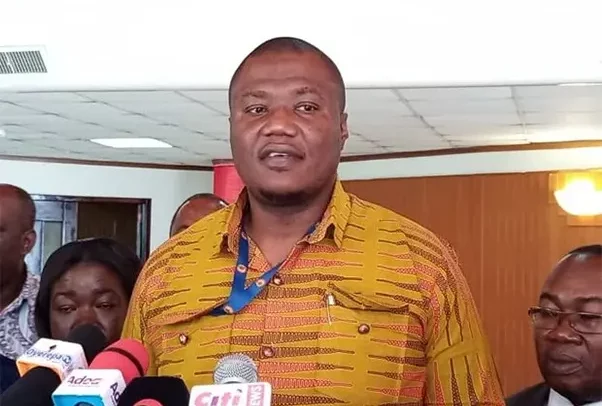
Dr. Nana Ayew Afriye
The Minority in Parliament has rejected claims that the National Health Insurance Scheme (NHIS) inherited significant debt from the previous New Patriotic Party (NPP) government, insisting that the current management of the National Health Insurance Authority (NHIA) assumed office without outstanding liabilities.
Addressing a press conference in Parliament, the Ranking Member on the Health Committee, Dr. Nana Ayew Afriye, said assertions that the government has recently disbursed $2.6 billion to settle debts owed to health service providers under the NHIS were inaccurate and required clarification.
Dr. Afriye explained that the Minority was compelled to address the matter after the Minister of Health, Kwabena Mintah Akandoh, indicated when answering question during parliamentary sitting on Monday that the government had disbursed $2.6 billion to clear arrears owed by the NHIS to health providers.
According to him, the Minority’s intervention was aimed at setting the record straight and ensuring that the financial status of the national health insurance scheme is not misrepresented to the public.
“We have come here to set the record straight with facts and figures,” he said, stressing that the NHIA’s own financial framework for 2025 shows that the scheme recorded a positive balance of about $1 billion.
Dr. Afriye maintained that the current management of the authority did not inherit any debt from the previous administration.
He explained that the only known arrears recorded under the scheme related to the period between 2021 and 2023, when the NHIS accumulated debts amounting to approximately $2.4 billion.
According to him, that amount was settled through three separate payments of $800 million each, which were disbursed by the then Comptroller-General.
“These payments were done openly and are part of the public record,” the lawmaker noted.
Dr. Afriye said the Minority considers it important to clarify the situation to prevent misinformation and to maintain public confidence in the operations of the National Health Insurance Scheme, which remains a critical pillar of Ghana’s healthcare financing system.
He further cautioned against what he described as the growing politicisation of issues surrounding the NHIS, warning that attempts to score political points with the scheme could undermine its credibility and long-term sustainability.
The Ranking Member emphasised that the NHIS plays a vital role in providing financial access to healthcare for millions of Ghanaians and must therefore be managed with transparency, accountability and accurate public communication.
He urged government officials to ensure that statements made about the scheme are supported by verifiable data to avoid creating unnecessary anxiety among healthcare providers and subscribers.
By Ernest Kofi Adu, Parliament House