

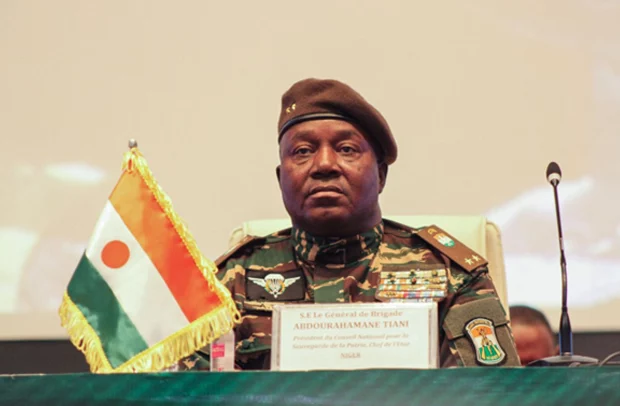
Niger military leader, General Abdourahamane Tchiani
Health Systems in Crisis: The Human Cost of Military Rule
The disruptive effects of recurring coups on fragile healthcare sectors have received insufficient attention despite their devastating impacts. Military takeovers interrupt healthcare systems, cause economic downturns, and create political instability that directly compromises public health outcomes. The consequences for maternal and child health, medical supply chain disruptions, and public health policy implementation are severe and long-lasting.
The COVID-19 pandemic revealed these vulnerabilities with particular clarity. The pandemic negatively affected countries most prone to coups by straining already tight budgets and placing further restrictions on populations already sceptical of their government. In coup-affected nations, healthcare responses to the pandemic were further compromised by political instability, loss of international support, and the diversion of resources to security concerns.
Sudan’s October 2021 coup provides a stark illustration. Under al-Burhan’s leadership, the Sudanese Armed Forces’ war tactics included indiscriminate bombing of civilian infrastructure, attacks on schools, markets, and hospitals, and extrajudicial executions.
The conflict that emerged after the coup killed thousands and created one of the world’s most catastrophic humanitarian situations. Healthcare facilities became targets, medical personnel fled, and populations lost access to essential services, including emergency care, maternal health services, and chronic disease management.
In countries facing jihadist insurgencies alongside coups, health outcomes deteriorated even more precipitously. Mali, Burkina Faso, and Niger all experienced coups while battling armed groups that deliberately targeted healthcare infrastructure.
The combination of conflict-related destruction, coup-induced aid suspension, and military governments’ prioritisation of security over health created perfect storms for public health disasters.
Educational Collapse: Undermining Future Generations
Education represents both a casualty and a cause of coup cycles. In the 1960s, Africa’s overall primary school enrollment rate averaged 42 per cent, compared to nearly 100 per cent in OECD or East Asian countries.
Had Africa achieved OECD-level enrollment rates during that period, its average annual growth rate would have been significantly higher. Improved enrollment rates since then suggested brighter economic prospects, but recent coups have reversed these gains.
Military governments consistently deprioritise education in favour of security spending. In February 2024, Niger issued new regulations securing unrestricted access to state resources for military spending, which became independent of public procurement regulations and thus independent control. This facilitated faster weapons purchases and mercenary deployment, but also enabled personal enrichment of rulers while education budgets were slashed.
The displacement caused by insecurity in coup-affected states compounds educational deterioration. In Burkina Faso, where an estimated 1.9 million people were internally displaced, entire communities lost access to schools. Teachers fled conflict zones, facilities were destroyed or occupied by armed groups, and families displaced by violence lacked the stability necessary for children’s education. The long-term consequences are catastrophic: a generation growing up without education, reducing human capital and perpetuating poverty cycles that make future coups more likely.
Guinea’s experience reveals how political repression under military rule extends into educational spheres.
Universities and research institutions that could strengthen governance capacity faced budget cuts and political interference. Journalists and media regulators who implicated the Doumbouya regime with corruption were imprisoned for defaming the head of state, creating climate where intellectual inquiry and critical thinking—essential foundations for educational excellence—became dangerous activities.
The Standard of Living Decline: Measuring Coup Impacts on Daily Life
Comprehensive governance indices provide quantitative evidence of coups’ devastating impacts on citizens’ quality of life. All four countries experiencing recent coups—Mali, Guinea, Burkina Faso, and Niger—experienced declines in Security & Safety, Anti-Corruption, Participation, Inclusion & Equality, and Business & Labour Environment subcategories.
Mali’s governance deterioration was particularly severe. Only 37.7 per cent of surveyed Malians supported democracy after the coups, representing the largest decline in democratic support, while living conditions continued deteriorating despite—or because of—military rule. The promise of improved security proved hollow as the Alliance of Sahel States (formed with Burkina Faso and Niger) aligned closer with Russia and expelled French forces without achieving meaningful security improvements.
In Guinea, approximately two-thirds of Guineans surveyed viewed their living conditions as bad or very bad in 2021-2023, despite Doumbouya’s promises of transformation. The gap between military rulers’ rhetoric and citizens’ lived experiences reveals a fundamental flaw in coup logic: seizing power cannot substitute for building institutions that deliver services, protect rights, and create economic opportunities.
Niger’s experience demonstrates how coups accelerate multidimensional decline. The country deteriorated in the Security & Rule of Law, Participation, Rights & Inclusion, and Human Development categories. Support for democracy declined precipitously as citizens witnessed how military rule constricted political participation without delivering promised security improvements. The closure of civic space, imprisonment of opposition figures, and restrictions on media freedom created environments where grievances could not be addressed through democratic channels, storing up conditions for future instability.
Historical Parallels: Lessons Unlearned from Africa’s Coup Cycles
Africa’s history provides abundant evidence that coups compound rather than solve governance problems. The immediate post-independence period between the 1960s and 1970s saw the first wave of coups, which were generally bloody and resulted in the deaths of twelve African leaders, extrajudicial killings, and widespread human rights abuses. These coups were often praised for truncating one-party statism and life-long presidencies, yet they failed to build sustainable democratic institutions.
The second wave from 1990 to 2001, led largely by mid-level military officers touting economic mismanagement justifications, accounted for only 14 per cent of leader deaths but still represented major threats to security of tenure and the emerging democracy. This wave prompted the 2000 Lomé Declaration and tightened continental norms against unconstitutional changes of government. Yet despite these normative frameworks, coups have resurged since 2020.
The current third wave exhibits concerning characteristics. Recent coups in Guinea, Niger, and Gabon have been led by elite presidential guards rather than regular armies, highlighting how those closest to power can most easily seize it. These units, often better armed and trained than regular forces, use their proximity to presidencies to take control before lobbying for broader military support. This pattern suggests that creating powerful security forces to protect regimes paradoxically makes those regimes more vulnerable to overthrow.
Mali’s history is particularly instructive. The country witnessed coups in 1968, 1991, 2012, 2020, and 2021, demonstrating how each military intervention fails to break the coup cycle. Thomas Sankara’s revolutionary government in Burkina Faso (1983-1987) initially inspired hope for transformative change, only to be overthrown by Blaise Compaoré, who then ruled autocratically for 27 years before being deposed in 2014. The pattern repeats: coup leaders promise reform, fail to deliver, and create conditions for future coups.
Source: Eric Akuamoah-Boateng