
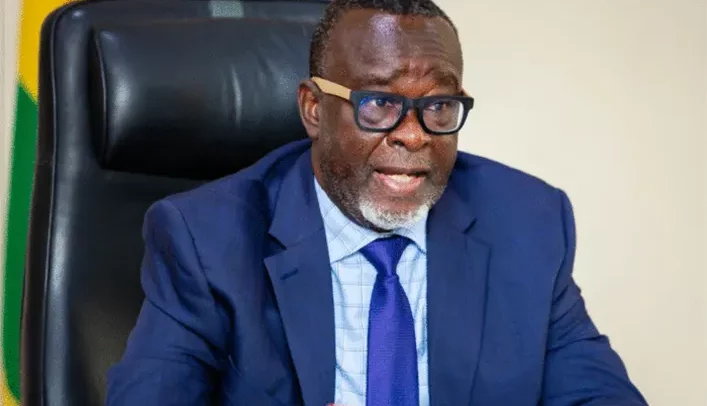
Chief Justice Paul Baffoe-Bonnie
Chief Justice Paul Baffoe-Bonnie says the future of the Judiciary must encompass a deep moral commitment to excellence in the delivery of justice for all.
According to him, the future of the court must be faster—because delayed justice is diluted justice; clearer—because obscure justice is inaccessible justice; and closer to the people—because distant justice is denied justice.
He was speaking at the official launch of the 150th anniversary celebration of the establishment of the Supreme Court at the University of Ghana yesterday.
The event drew very distinguished guests, including two former Chief Justices Theodora Wood and Sophia Akuffo, former Supreme Court judges, lawyers, heads of academic institutions, chiefs and the clergy.
Justice Baffoe-Bonnie said the anniversary is not only a commemoration but a turning point and a mandate.
“The court of today is a living institution: busier, more accessible, and more transparent than ever. We have embraced technology, strengthened processes, and worked tirelessly to deliver justice that is timely and fair. Our courts, from the apex to the districts, serve millions who turn to us when all else feels uncertain,” he said.
He highlighted some reforms implemented over the years to improve access to and delivery of justice, including the introduction and improvement of the E-Justice Programme, shifting towards digital filing, digital service, virtual hearings, and digitised records, thereby making justice faster, more efficient, and more accessible.
“We have introduced extended court sittings via the Two Streams system, turning time itself into an ally of justice. Through specialised courts for emerging areas of law, we are acknowledging that the law must grow with society,” Justice Baffoe-Bonnie noted.
He further indicated that through the ongoing revision of the Rules of Court, the Judiciary is attempting something fundamental—to ensure that procedure serves justice and does not suffocate it.
“We are equally strengthening security and infrastructure around the courts, ensuring that justice is delivered in safe and dignified environments. And we are actively and cautiously reforming legal education, to achieve a twin solution of expanding access, while preserving quality,” he added.
However, he acknowledged that there are still delays and barriers in the justice delivery system, and “moments when justice feels distant to those who need it most and confidence is shaken when justice comes too late, or costs too much, or feels too far.”
Justice Baffoe-Bonnie noted that when the Supreme Court is strong and independent, the rule of law stands firm, when justice is accessible, impartial, and humane, democracy breathes freely.
“Behind every case is a human story: a family, a livelihood, a life in the balance. Courts are human institutions — only as strong as the integrity of those who serve in them, only as trusted as the fairness they demonstrate, and only as relevant as the justice they deliver. No technology or reform can replace conscience and judgment,” he added.
Former Speaker of Parliament, Prof. Aaron Mike Oquaye, who was the Special Guest of Honour, warned against the consequences of what he described as “selective acceptance of the decisions of the Supreme Court”, urging Ghanaians to accept all the decisions of the apex court because it is the final arbiter in the country.
Former Justice of the Supreme Court, Justice (rtd) Yaw Apau, who was the Guest of Honour, said the authority of the Judiciary ultimately rests on public confidence, and that confidence can be obtained by integrity, impartiality and accountability of those who serve on the Bench.
Former Chief Justice Sophia Akuffo, who chaired the event, noted that the passage of the Legal Education Bill, 2025 by Parliament must strike the balance between quality in legal education and the desire to open access to many.
“If we must sacrifice one thing, then we must sacrifice the numbers for the quality. Because quality lawyers make quality judges,” she advocated.
BY Gibril Abdul Razak